the company
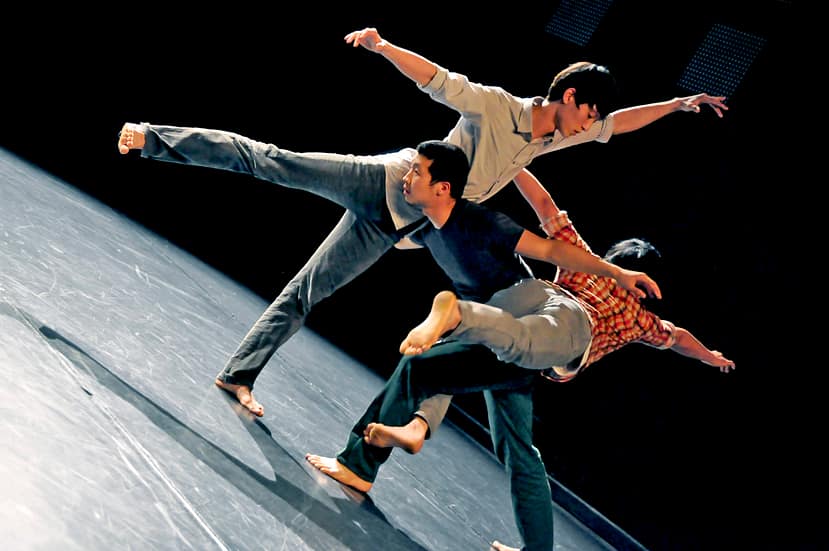
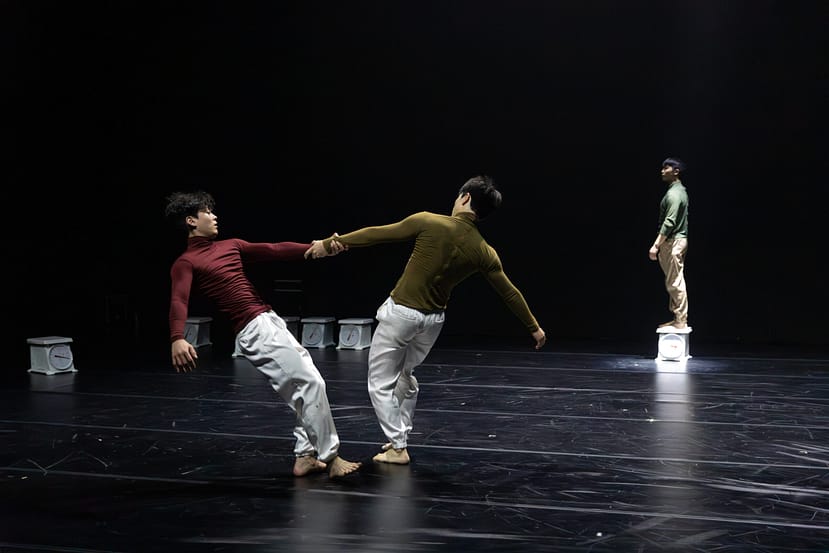
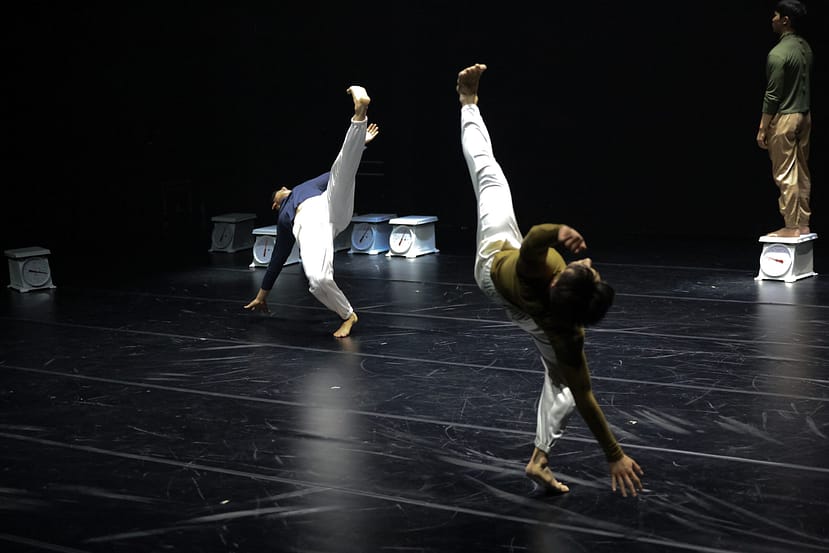
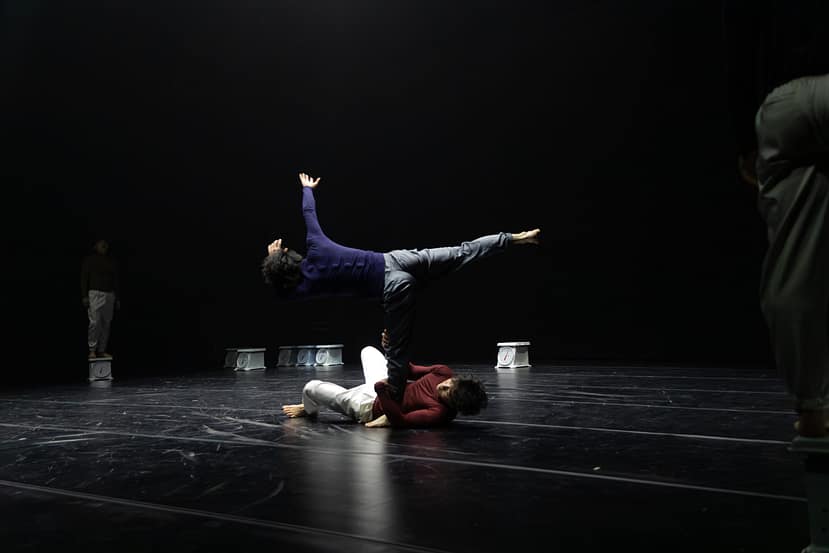
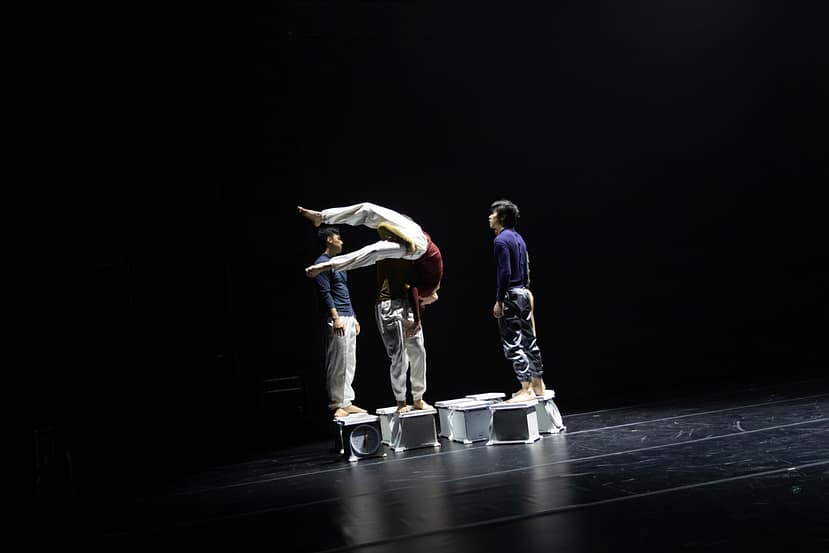
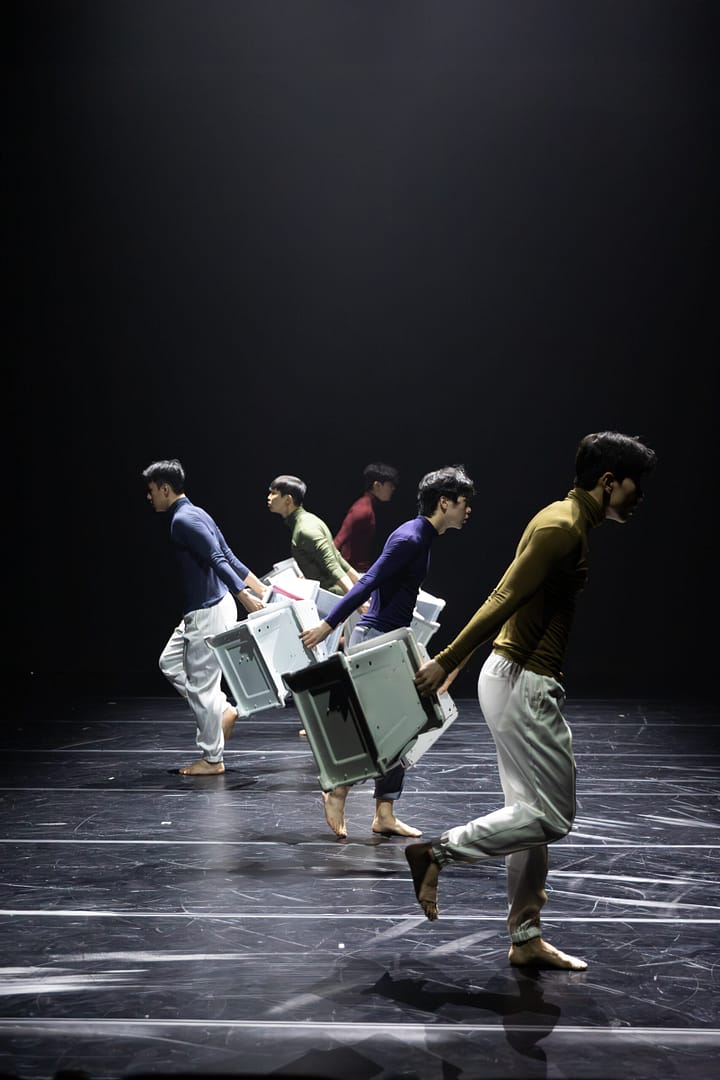
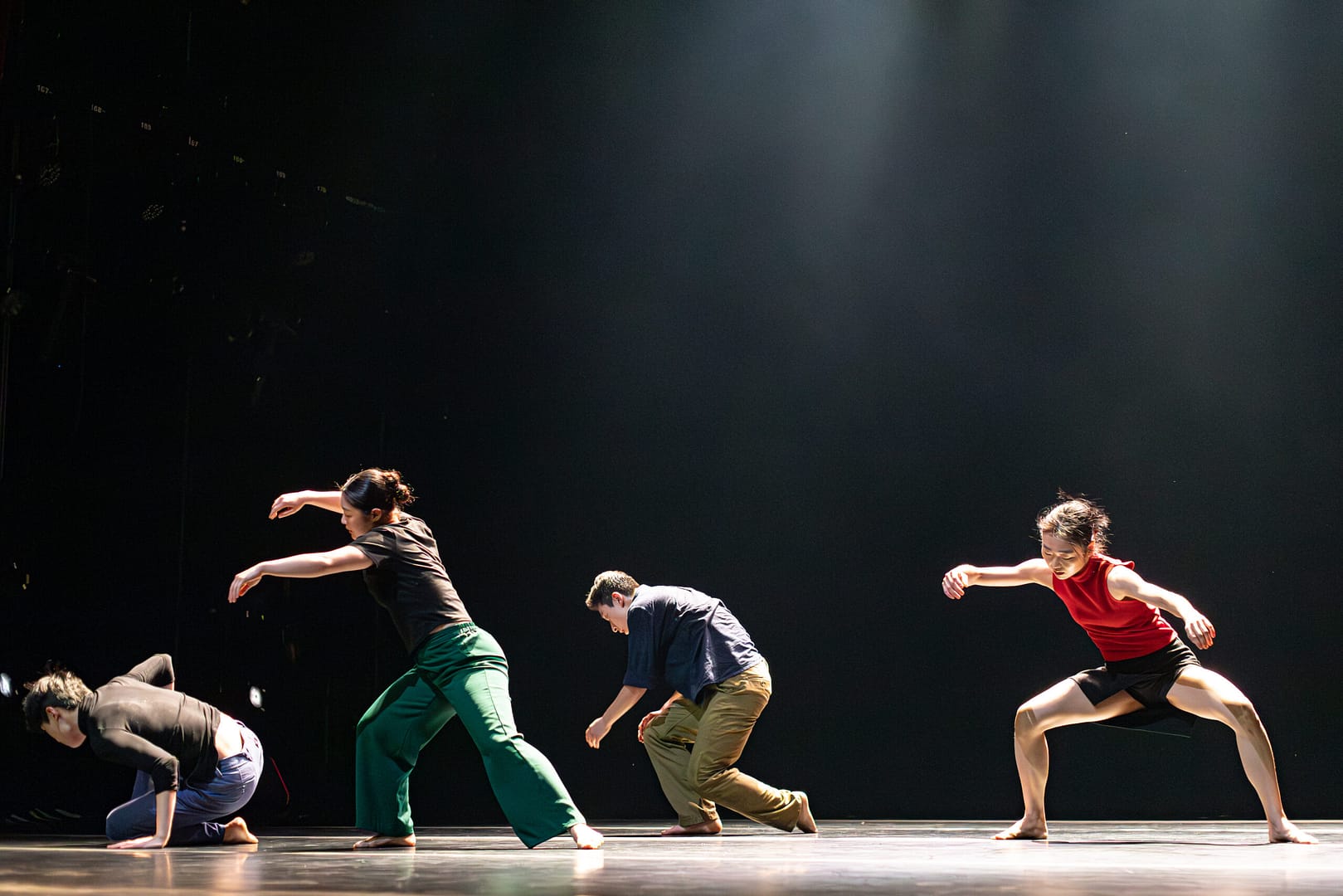
“The street style in dress and movement disguises finely honed skill in balancing bodies at extraordinary angles and in extraordinary configurations. […] It proved a winning selection.”
–Critical Dance
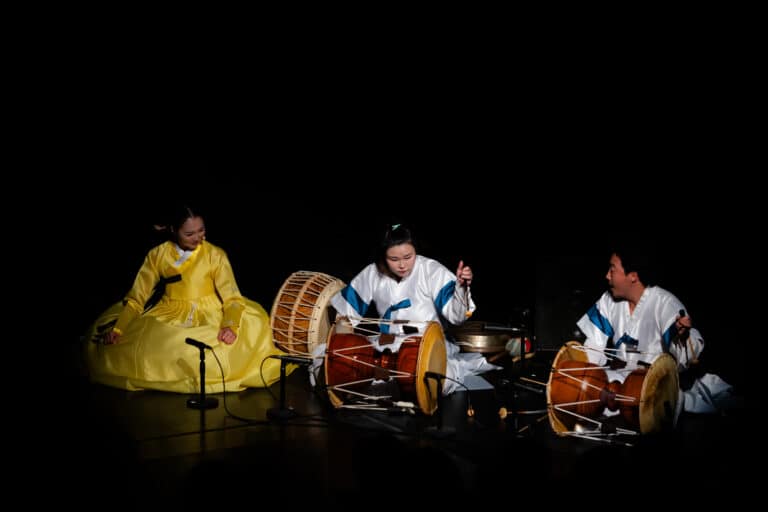
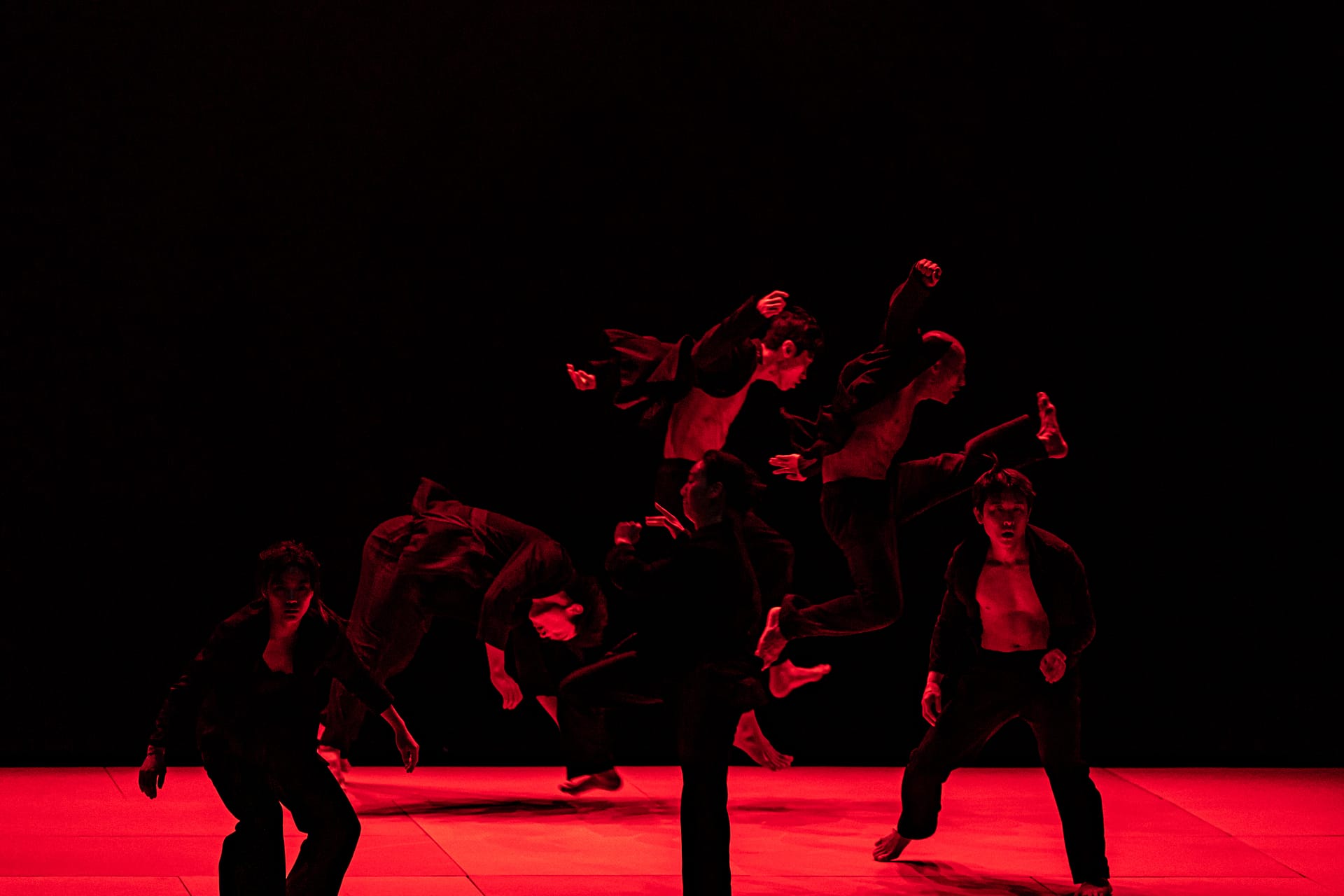
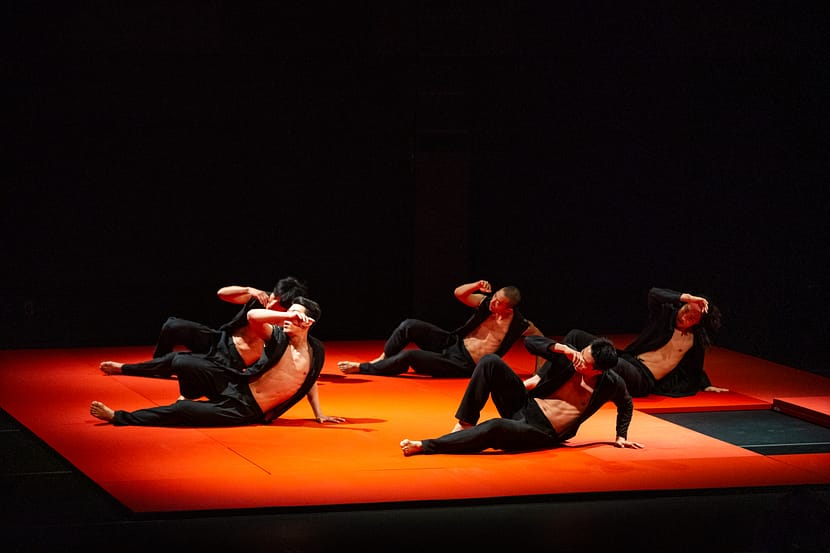
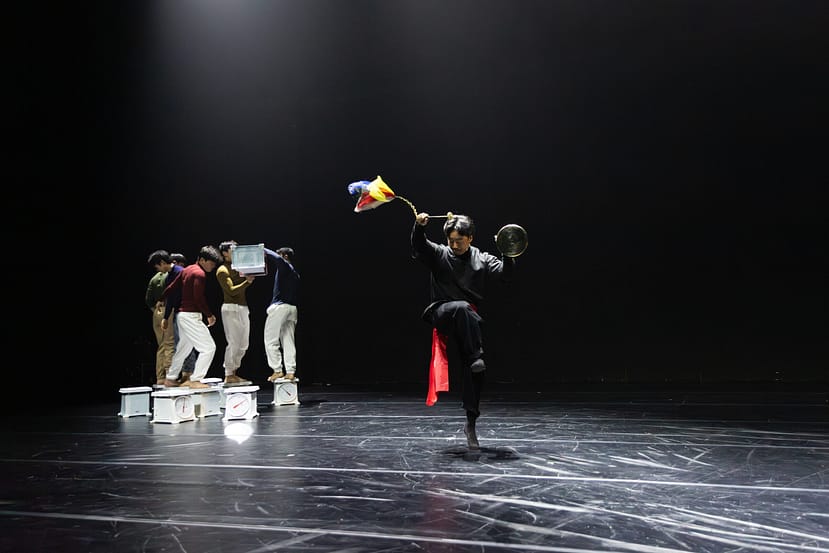
Founded in 2011 by choreographer Soon-ho Park, Bereishit is a Seoul-based dance company that approaches Korean traditional culture from a contemporary view–keeping the fundamental value of things, as opposed to simply borrowing or transforming them. The work also explores the issues of identity and transformation and delves into multimedia, street dance, community dance work and real time interactive demonstration. It displays an amazing sensitivity towards space and rhythms and its performances are always delivered with kinesthetic clarity and power. Bereishit has toured internationally including to a sold out house at the Arts Center of NYU Abu Dhabi, and in the US at venues such as Mondavi Center, USC Visions and Voices, McCarter Theatre Center, OZ Arts Nashville, Jacob’s Pillow Dance Festival, Pittsburgh Dance Council, ArtPower at UC San Diego, Celebrity Series of Boston, NYU Skirball, and The Ringling. The company has also set a work on the dance students of Rutgers University and George Mason University.

the director
SOON-HO PARK majored in contemporary dance at Hansung University in Seoul, Korea, and actively worked as a professional dancer from 1992 to 2001. He then completed a choreography course at the Arnhem European Dance Development Center in The Netherlands where he developed his work, trying diverse experiments through his solo or trio pieces. He participated in many projects as a dancer in The Netherlands, Germany and other European countries and was selected as the New Choreographer by the German institution PACT Zollverein in 2003.
Soon-ho has done various works and projects with installation and media artists, and musicians, including a collaboration with Giga Hizume, who is the director of Sal Vanilla, a multimedia and live performance group in Japan. He has received major funding from Arts Council Korea, and awards including The Choreography Award of the Year by the Performing Arts and Film Review, The New Choreographer’s Award by the International Modern Dance Festival, and the Best Choreography Award both from the Korean Dance Researchers and Critics Association and the ChangMu Arts Center. His work opened the Festival Asia in Barcelona, Spain, in 2007. Since then, Soon-ho’s works have been presented at venues and festivals in many countries such as Poland, the United Kingdom, Brazil, Uruguay, India, Switzerland, and Mexico, amongst others.
In 2011, in collaboration with Australian choreographer Rebecca Hilton and the Art Center Nabi, Seoul, Soon-ho conceived the ‘Hello Project’, which is the Australia-Korea live public dance and screen project. Using only gestures and dance moves, the project utilized Skype technology on a grand scale, and tracked the sharing, teaching, learning and interpreting of different movement gestures as they were exchanged live via large public screens located in Seoul and Melbourne.
Soon-ho’s works convey the various images surrounding the relationship between nature and people. Focusing on the origin of movements, he is interested in the fact that every subject has two different ends in and of itself. Dutch critic Mark Ben referred to him as transmitting ‘astonishing stimulation’. Not using music simply as a tool in his dance works, he considers himself as the visual movement or bodily rhythm. He believes that sound can touch the heart and be expressed as movement. By seizing the subtle bodily rhythm in the works, he opens up the eyes and ears of his audience members.
Soon-ho’s choreography is acclaimed for its creation of something new, something which transcends the East and the West, dance and martial arts, and traditional and contemporary movement.
Since 2004, in addition to his choreographic work, Soonho has been actively engaged in teaching contemporary dance at various universities across Korea. He is currently serving as an adjunct professor at Hanyang University ERICA and also teaches at Seoul Institute of the Arts. His current courses include Dance Composition, Sound Design for Choreography, and Improvisation.
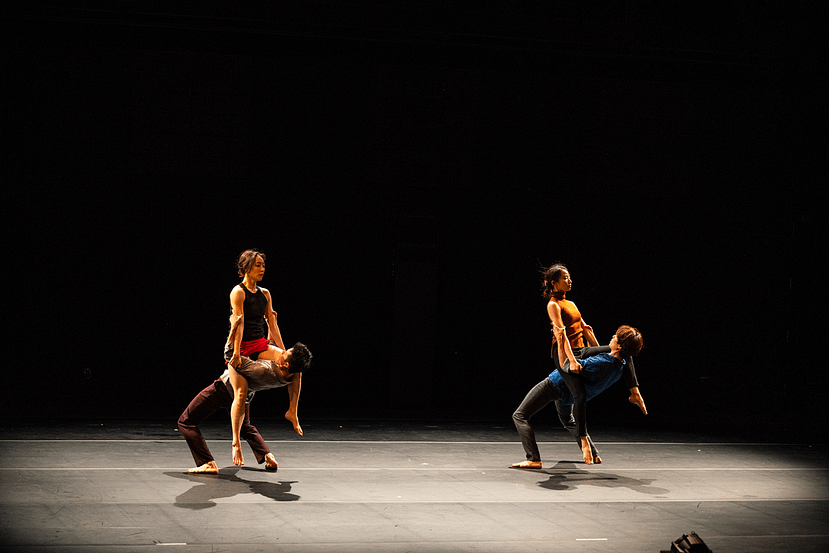
GYEONG-IN (京人)
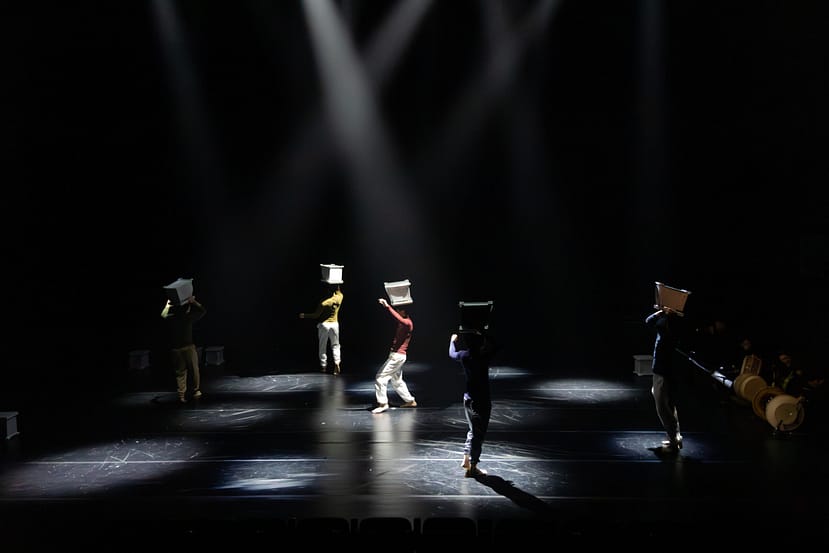
Gyeong-In (京人) means a person of Seoul. In this work, Seoul is presented as the condition of contemporary human existence — a place of sensation. Pushed to move faster, accumulate more, reach higher, people desire without end. Yet what they meet at that end is not fulfillment, but lack and emptiness. This work follows how a society of relentless acceleration dismantles the body’s balance and twists the rhythm of its own movement. The inertia of desire and the sensation of lack collide violently within the body. Anxiety becomes a weight pressing down on the shoulders, causing the body to stagger. That tension is inscribed deep in the body. Moving precariously between balance and imbalance — like a city that trembles — the body itself becomes the sensibility of the contemporary person. Within that unstable vibration — standing still, making contact once more with what we encounter in life. GYEONG-IN asks about that possibility through the body.
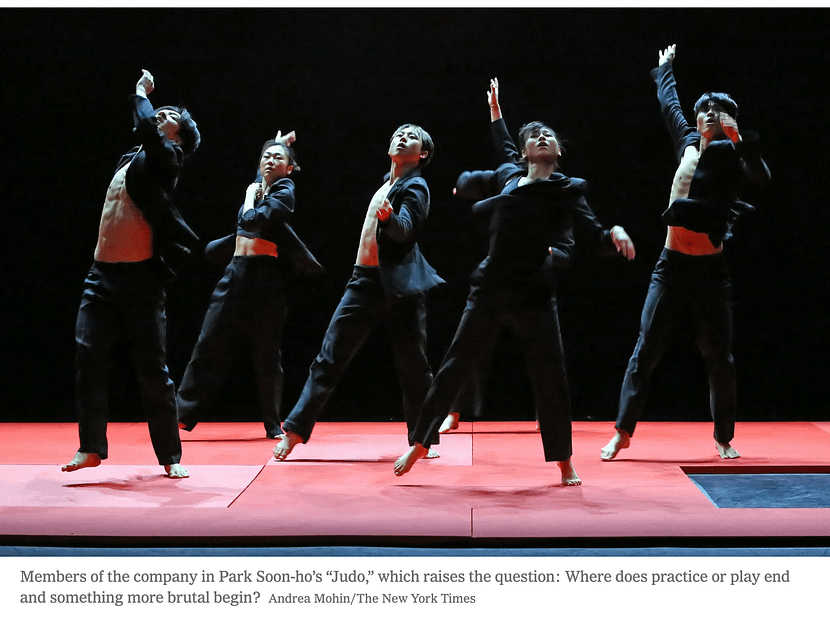
JUDO
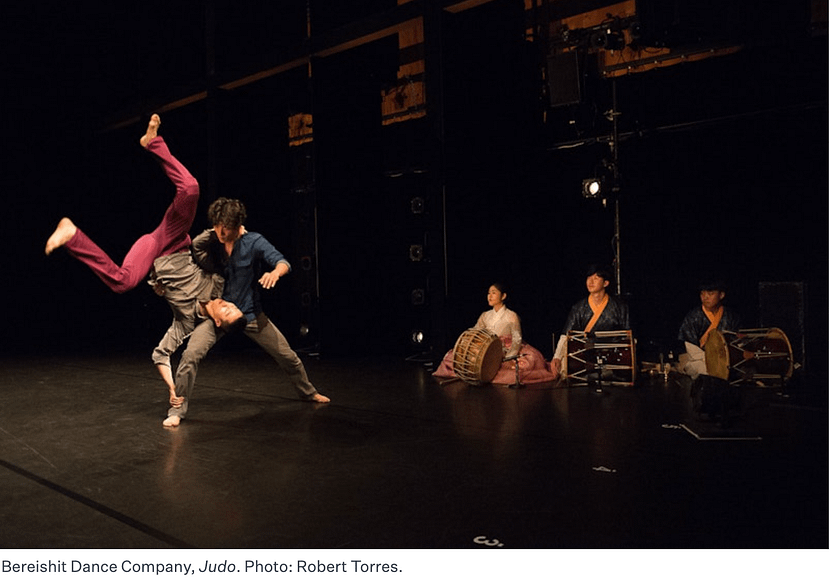
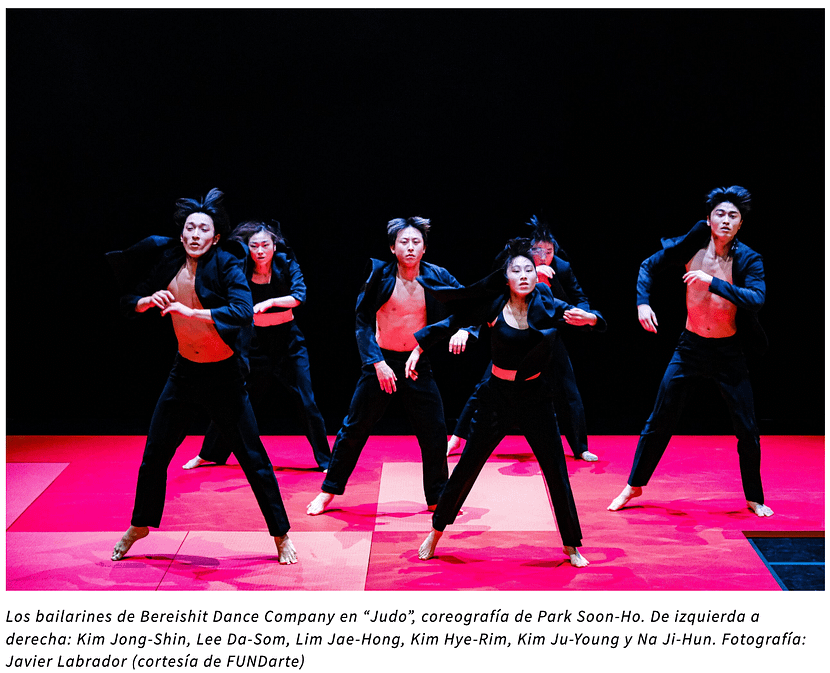
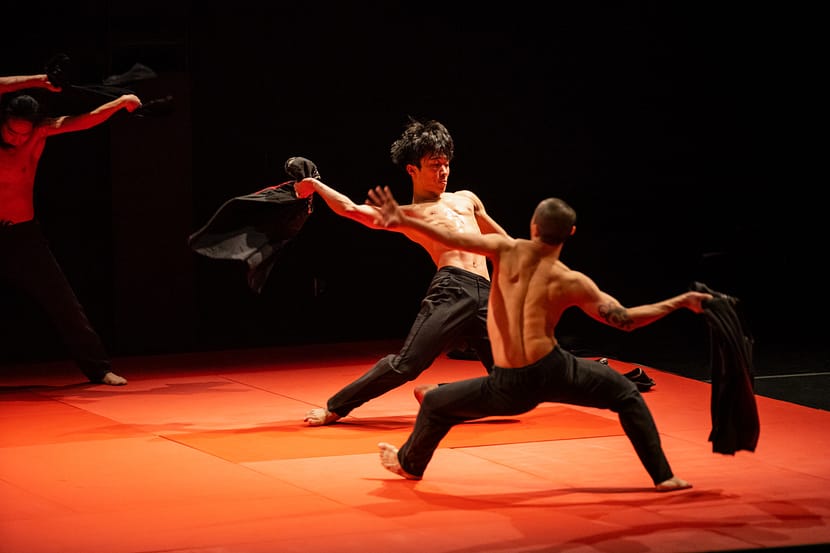
In a judo match, what you see first is technique and the outcome of winning or losing. But something else churns within. Within the rules of sport, an immense energy seethes — on one side, a raw, animal aggression; on the other, a state that seeks to move beyond its own limits toward another dimension. A body running at full force. Launching off — surging up and over the opponent in that instant. Within this repeated and accumulating motion, a latent impulse steadily amplifies. Beyond mere attack — the will to surpass oneself collides with instinct. Yet the two remain inseparable. They emerge as a single gesture. At the boundary between sport and dance — how can the most primal force within a person and their highest aspiration coexist as a single rhythm and beauty? JUDO poses that question through the body — from the deepest interior of human existence.
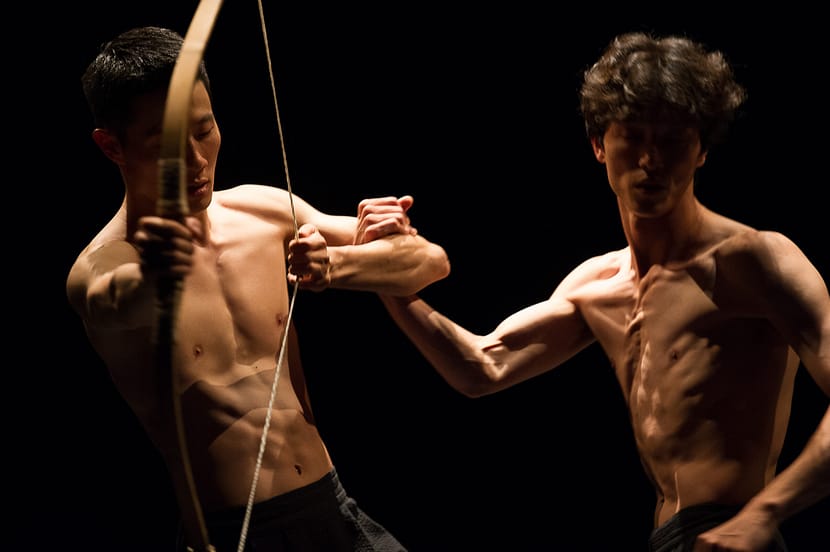
BOW
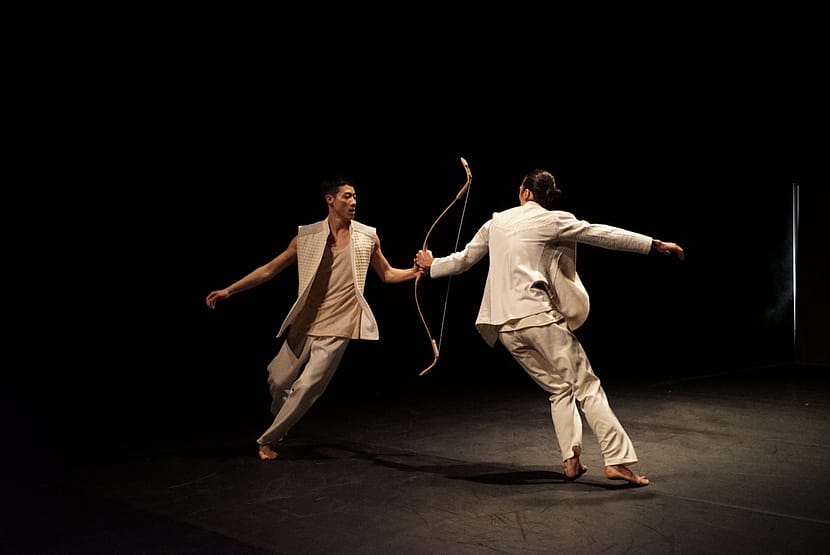
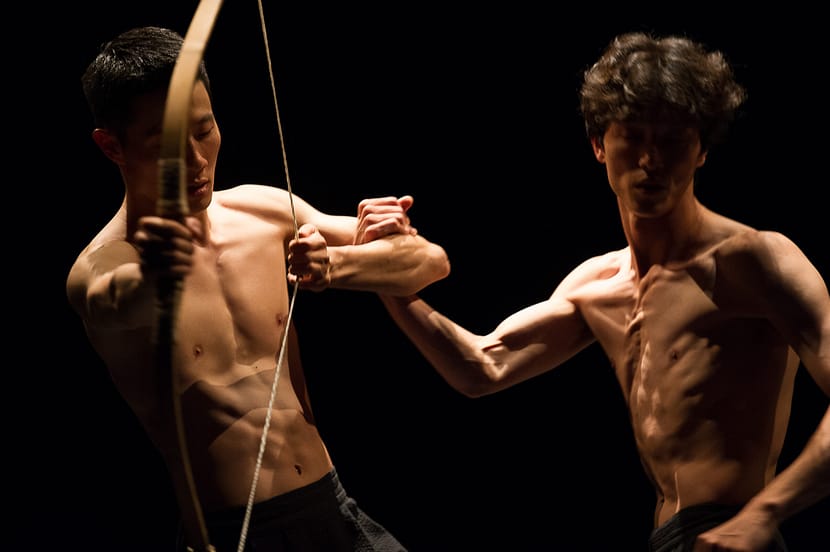
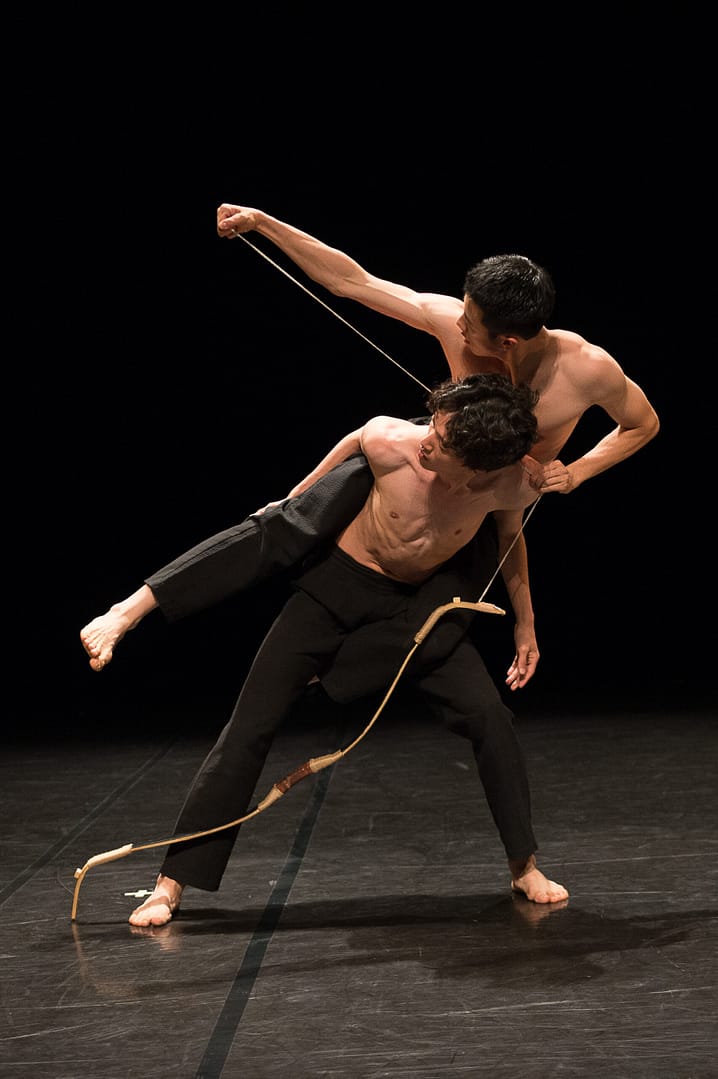
A bow is a weapon aimed at another. But at the moment the string is drawn — it is the self that comes under aim. Gungsul (弓術) is the technique of hitting a mark. When it becomes gungye (弓藝) — skill turns inward. BOW stands at that turning point. Where a weapon becomes an instrument. The bow’s kinetics — drawing, holding, releasing — are translated into the body and become rhythm. That rhythm carves a space on stage curved like a bow. Two male dancers stand on stage. But they are not truly separate from one another. They are two faces of one person. The push and pull between them is not a confrontation. It is a rigorous encounter with oneself. The direction the string aims and the direction the inner self points ultimately meet. BOW treads precariously along the boundary between sport and dance, body and mind, other and self — never settling on either side. With one foot on either side, repeating advance and retreat — the string is ultimately drawn toward oneself.
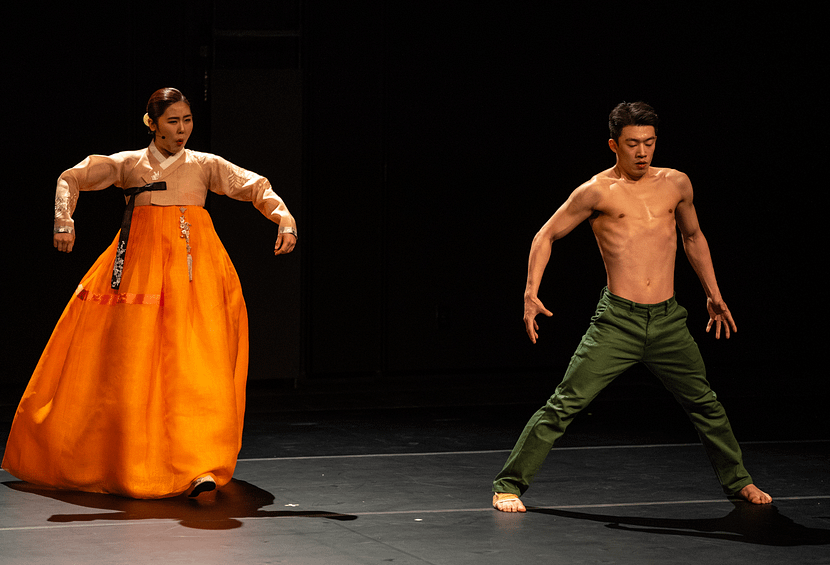
Balance and Imbalance
When the sorikkun‘s aniri (spoken narrative) cuts through space, gesture tilts and flows along the grain of the spoken word. As the rhythmic patterns of samulnori press into the gaps of movement, music and gesture begin to weave into one another. Two bodies meet and exchange weight. When one body leans, the other receives it. In the instant just before collapse, balance emerges in the tension between two opposing forces. The grain of speech, the grain of rhythm, the grain of the body — these different forces do not dissolve into one. They remain distinct, yet coexist in contact. Harmony is not the absence of tension. It is tension held taut and alive. Human relationships are the same. Never settling into perfect balance, we live only by tilting, receiving, and wavering. Balance & Imbalance reveals that moment through the body: harmony as dynamic tension.
COMMUNITY WORKSHOPS
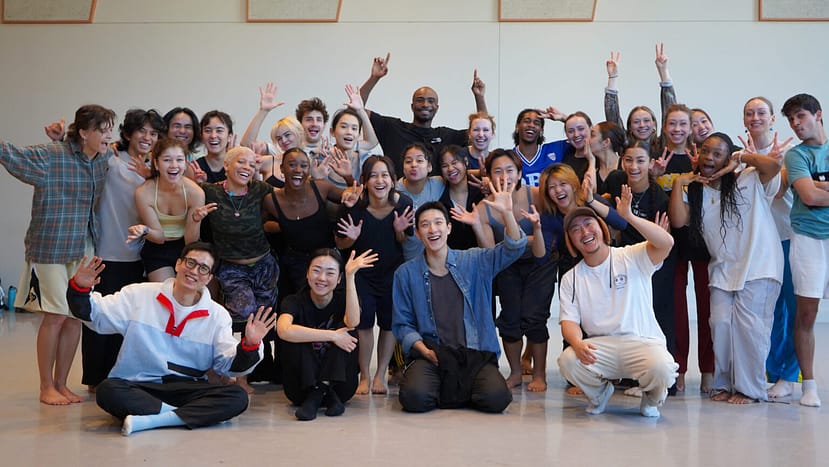
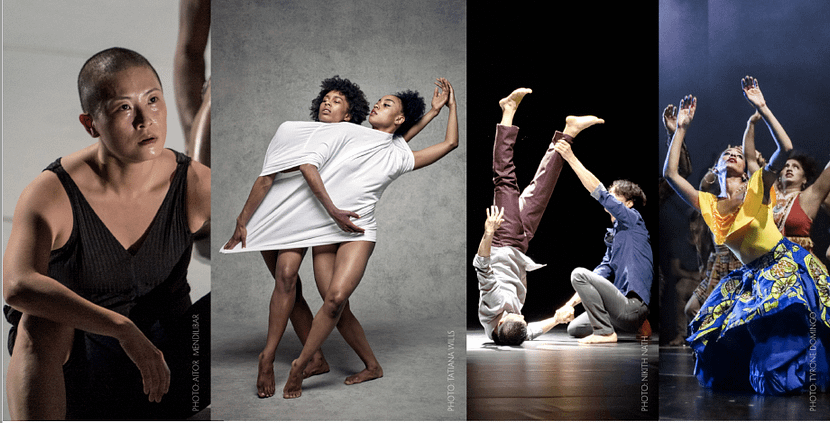
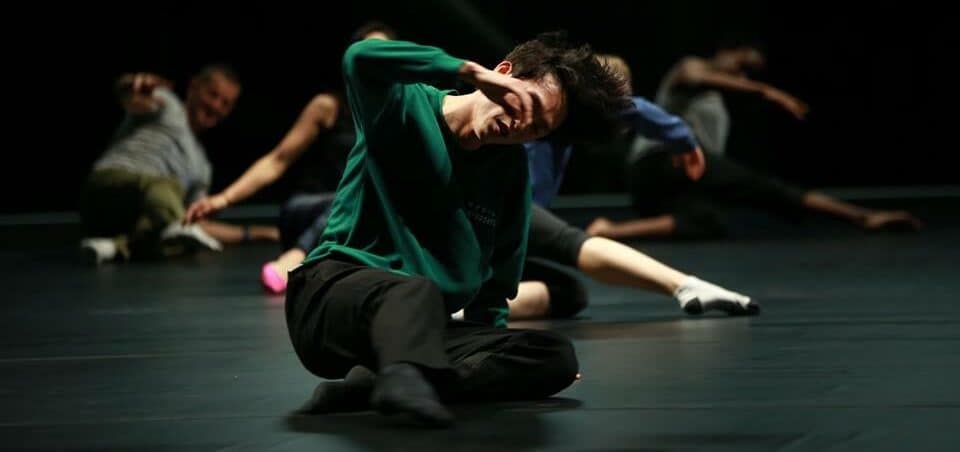
For Soon-ho Park, the significance of dance is freedom. Dancing with the members of a community restores dance as the body of the ordinary working classes. Community dance workshops will enable participants to express their existential needs and their desire to live through their body.
TECHNIQUE CLASSES
Body movements contain texture, space, rhythms and other various elements. The Bereishit technique classes will allow participants to experiment a relationship with external elements through movement and feel an inner relationship between the chi and themselves, which is the fundamental principle of oriental martial arts such as aikido and tai chi.
CHOREOGRAPHIC WORKSHOPS FOR DANCE MAJORS
These workshops focus on various elements of the choreography including the movement, space design and semantic of the action. These components change along with the relationship and have numerous meanings.
CHOREOGRAPHIC WORKSHOPS FOR DANCE PROFESSIONALS
These workshops focus on Soon-ho Park’s creation process. He considers his choreography as abstract as its role is to simplify and filter reality. Through observation and experience he is able to reveal the philosophic or core essence of the work.